In the winter of 1999 and 2000, the streets of South Korea would fall eerily quiet every Monday and Tuesday night. When the drama Hur Jun began at 10 p.m., taxis suddenly became easy to hail, and every restaurant TV was tuned to the same channel. This was the unprecedented phenomenon created by the MBC drama Hur Jun.
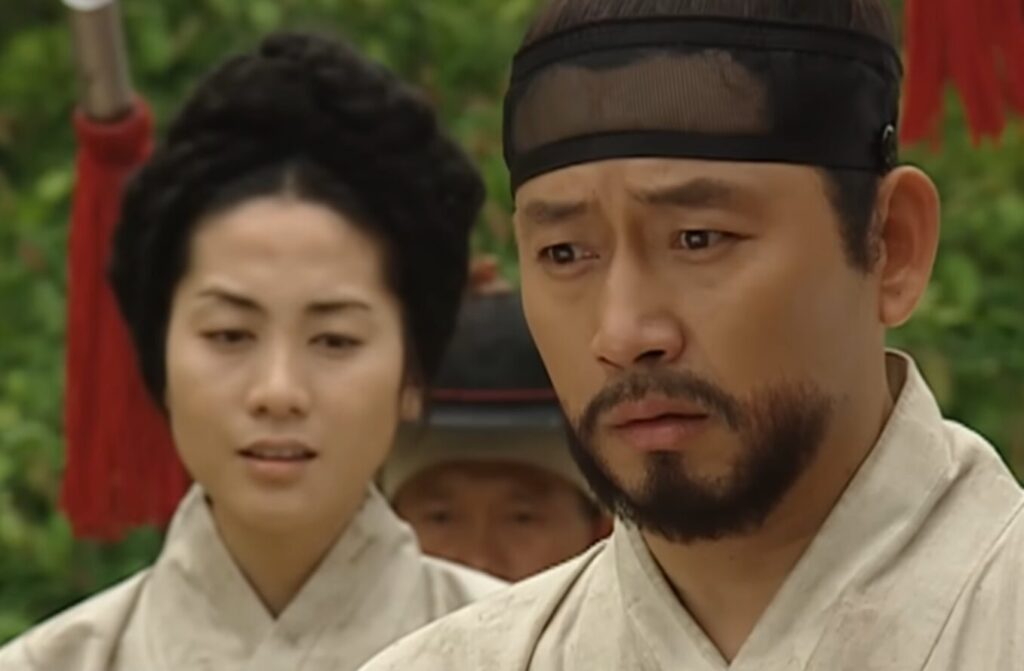
With a peak viewership rating of 64.8%, this drama that captured the hearts of Koreans had already been produced twice before — as Jipnyeom (1976) and Dongui Bogam (1991) — and was later remade again in 2013 as Guam Heojun. Even though audiences already knew the story, it aired four times and drew huge popularity each time, likely because it conveyed the nobility of a human life based on true events.
After the 1991 airing of Dongui Bogam, interest in traditional Korean medicine surged. Watching the character Heo Jun overcome an epidemic using Japanese plums (maesil), a real-life “maesil boom” swept the country, and even today, many people still make maesil wine and maesil syrup every year. Maesil’s well-known benefits include aiding digestion, relieving fatigue, and detoxifying and antibacterial effects. Its rich organic acids support stomach movement, clear fatigue substances from the body, and suppress harmful bacteria.
The 2000 airing of Hur Jun pushed interest in traditional medicine even higher. It’s said this was the only period in which the entrance-exam cutoff for Korean medicine schools actually surpassed that of regular medical schools.
A peak rating of 64.8%. On paper, it looks like just another old ratings record — but for those who lived through that era, Hur Jun was far more than a historical drama. Even now, decades later, amid a flood of masterful new dramas and glossy OTT originals, it’s worth pausing to ask why so many people still name this show as the drama of their lifetime. It’s a title I’d wholeheartedly recommend to any foreign fan of Korean dramas.
In 2012, from February to May, the MBC drama Hur Jun aired on a public broadcaster in the Kurdistan Region of Iraq — and reportedly hit a staggering 80% viewership rating. People were so absorbed in the show that in a region plagued by near-constant violence, reports say there was no terrorism recorded during the hours the drama aired.
As a result, actor Jeon Kwang-ryul, who played the title role of Heo Jun, received a handwritten invitation from Hero Ibrahim Ahmed, wife of the President of Iraq, delivered through the Korean Embassy in Iraq. Iraq is designated a travel-restricted country by South Korea’s Ministry of Foreign Affairs, so Korean citizens ordinarily cannot travel there without special authorization — but given the personal invitation from Iraq’s First Lady, Jeon was granted an exceptional passport-use permit and visited the northern provinces of Iraq, where he was welcomed as a state guest by enthusiastic local media and fans. He didn’t stop there — he went on to organize the “Sharing Korean Medicine Volunteer Corps” and actively took part in humanitarian medical missions in Iraq. The First Lady herself joined his second visit, and his medical volunteer group made headlines once again after receiving a promise of state-level security and protection. (Source: Namuwiki)
1. From the Son of a Concubine to a “Healer of the Heart”: The Fiery Growth of a Man Named Heo Jun
The greatest resonance that Hur Jun offers is “a relentless will that blossomed from the lowest place.”
The protagonist, Heo Jun (played by Jeon Kwang-ryul), was a rough young man who turned to smuggling and illicit trade after hitting the ceiling of his social status simply for being the son of a concubine. But everything changes when he flees with his mother and wife Dahui to Sancheong and meets his teacher, Yu Ui-tae (played by Lee Soon-jae).
What makes this drama exceptional is that it never portrays Heo Jun as a fully formed saint from the very beginning.
He grows impatient trying to earn his teacher’s approval, and blinded by rivalry with his teacher’s son, Yu Do-ji (played by Kim Byung-se), he makes mistakes along the way. Yet through trials that teach him to feel a patient’s pain as his own, he steadily moves from being merely a skilled physician toward becoming a true “healer of the heart” (心醫).
“A physician must not merely look at the patient’s illness — he must look into the patient’s heart.”
This philosophy, emphasized by his teacher Yu Ui-tae, runs through the entire drama and still strikes a deep chord for those of us living in the modern world.
These days, the drama The Real Has Come! (a show about a mentor transforming a student) is quite popular. Stories of one great teacher changing a student’s entire life exist across both East and West throughout history. In East Asian tradition, deep reverence was taught for one’s king, teacher, and parents — but sadly, much of that reverence has faded in modern times.
For nobles and the wealthy, falling ill simply meant visiting a physician — but for commoners, that was a real burden. After much anguish, Heo Jun opened a path for ordinary people to heal themselves using the plants and trees around them, and that path became the book Dongui Bogam. The countless sufferings this book resolved are still praised to this day.
2. Legendary Scenes: The Dissection, and a Teacher’s Final Gift
Hur Jun is filled with unforgettable scenes that still move viewers to tears today. Chief among them is the episode of his teacher Yu Ui-tae’s self-dissection.
Facing death from paralysis and stomach cancer, Yu Ui-tae offers his own body to his student Heo Jun, leaving him a final wish: to see the inside of the human body with his own eyes and complete his medical craft. In a dark cave, weeping as he accepted his teacher’s final act of grace at the edge of a blade, Heo Jun’s image in that moment is remembered as one of the most sacred and powerful scenes in the history of Korean historical dramas.
Beyond that, the moments where he rushes into a plague-stricken village at the risk of his own life to care for the sick, or gives up his chance to take the royal court physician’s exam because he cannot turn his back on the poor and the ill — these scenes remind us what true devotion really means.
3. Richly Drawn Characters and Unforgettable Supporting Roles
The vivid supporting characters who enriched this story cannot go unmentioned.
- Yu Ui-tae (Lee Soon-jae): A stern master who hid a deep love for his student beneath his discipline.
- Yu Do-ji (Kim Byung-se): A complex figure torn between inferiority toward Heo Jun and burning ambition.
- Lady Ye-jin (Hwang Su-jung): Heo Jun’s spiritual anchor and devoted supporter.
- Im O-geun (Im Hyun-sik): The comic relief who gave the drama its levity — and coined the nationwide catchphrase, “Line up! Line up!”
This richly built cast of characters — leads and supporting roles alike — combined with writer Choi Wan-gyu’s solid script and director Lee Byung-hoon’s polished direction to keep audiences engaged for all 64 episodes without a single dull moment.
4. A Book for the People: The Great Legacy of Dongui Bogam
In its later half, the drama shifts its focus away from palace power struggles or personal success, centering instead on Heo Jun’s lonely struggle to write Dongui Bogam, a medical text meant for the people of Joseon.
The process of carefully recording Korean names and remedies using local herbs (hyangyak) so that ordinary people, dying from war and famine, could heal themselves is deeply moving in itself. His unwavering devotion — refusing to put down his brush even as his own body twisted and his eyesight faded — lets us truly feel the historical weight behind why Dongui Bogam was later inscribed on UNESCO’s Memory of the World Register.
5. Memorable Quotes
🩺 Yu Ui-tae (Lee Soon-jae) — The Philosophy and Teachings of a True Master
- “A physician must not merely look at the patient’s illness — he must look into the patient’s heart.” (The central line referenced above, running through the entire drama)
- “There is no illness in this world that cannot be cured. There are only physicians who fail to cure it.”
- “There is no rank among illnesses — how then can one judge the sick by their social standing?”
- “Cut open my body, uncover the cause of disease, and save those who suffer in this world.” (His final wish, offering his own corpse to his student)
- “Even water has thirty-three different uses. How can one who cannot even discern water call himself a physician?”
- “A true healer of the heart is one who feels a patient’s pain as his own — one who holds compassion (矜恤之心) within.”
- “You are not fit to be a physician! Leave my house at once!” (Rebuking and disowning Heo Jun in a moment of arrogance)
🌿 Heo Jun (Jeon Kwang-ryul) — Unbending Will and Healing Art
- “I am merely a physician who heals the sick.” (Turning down power and wealth to stay true to his calling)
- “How can I cut into my teacher’s sacred body with my own hands… Master!” (Weeping before his teacher Yu Ui-tae’s body in the cave)
- “In life, I defied your will and was an unfilial student, but now that you are gone, I will carry out your will even at the cost of my life.”
- “Your Majesty, the people suffer from disease and famine. Please allow this humble servant to complete a medical text and save the pitiful people.” (Declaring his resolve to write Dongui Bogam)
- “As long as a needle case is in my hand, I can never abandon a patient.”
- “Every plant, tree, animal, and insect under heaven can become medicine to save a life.”
- “Mother, and Dahui too… I will surely become the finest physician in Joseon and give you both a life of comfort.” (Steeling his resolve during his days as a smuggler)
🤣 Im O-geun (Im Hyun-sik) — Comic Relief and a National Catchphrase
- “Line up! Line up!” (The catchphrase that swept the whole nation in the late 1990s)
- “Ah, my dear Hong-chun~” (His tender, comedic lines of courtship toward Hong-chun)
🌸 Lady Ye-jin (Hwang Su-jung) and Others
“Heo Jun was a living testament to human triumph — a man who never bowed before the towering wall of his birth status.” (Grand narration summarizing the entire story)
“Medicine is an art of benevolence (仁術). How dare you weigh law and social rank against saving a human life!” (Lady Ye-jin)
“Physician Heo! Please, save my mother, Physician Heo!” (The cries of the countless commoners who clung to Heo Jun’s sleeve)
“Through this medical text, we shall prove that Joseon’s medicine is in no way inferior to that of Ming China.” (The expectations of King Seonjo and the royal physicians toward Dongui Bogam)
In Closing: Why Hur Jun, Again, Right Now?
In an era flooded with fast-paced plots and sensational storytelling, Hur Jun shows us the quiet, classic power of genuine sincerity.
It is the journey of a man overcoming his own limitations and completing his life through a noble devotion to others. Hur Jun is not merely an old drama — it stands as one of the finest guides to life in our era, teaching us the right attitude toward life, patience, and above all, respect for our fellow human beings.
If you haven’t yet experienced this masterpiece, or if you’d like to revisit an old memory, why not start binge-watching from episode one this weekend?
The drama’s soundtrack also featured the voice of world-renowned soprano Sumi Jo, and her songs fit the story beautifully. Give them a listen again if you haven’t in a while.
| Songin I (送人 I) | Sumi Jo |
| Buringyeolgok (不忍別曲) | Sumi Jo |
And you can stream the full series for free at Yetdeu: MBC Legend Dramas (Korean-language streaming service).